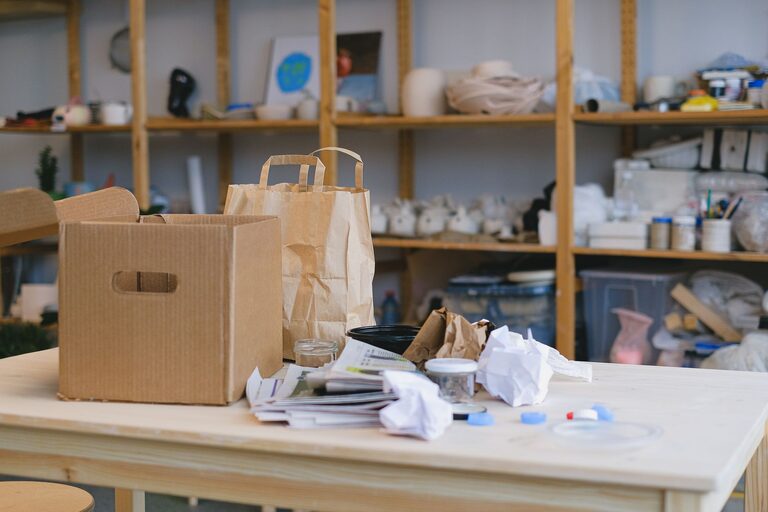
Paper clutter can build up quickly. Mail, receipts, school papers, manuals, notes, and forms often land in different places until counters, drawers, and tables are covered. The good news is that reducing paper clutter does not require a complete home makeover. A few simple habits can make paper easier to manage and help you keep only what you need.
Start With One Small Area
Trying to organize every piece of paper at once can feel overwhelming. Instead, choose one small area, such as:
– A kitchen counter
– One desk drawer
– A mail basket
– A filing cabinet shelf
– A small stack of papers
Set a timer for 15 to 30 minutes and work only in that space. A short session is easier to complete and gives you a visible result. Once one area is clear, you can use the same method elsewhere.
Before sorting, gather a few basic supplies:
– A recycling bag
– A trash bag
– A folder for items that need action
– A folder for documents to keep
– A pen or marker
– A box for papers that need to be scanned
Use Four Simple Categories
A basic sorting system can help you make decisions quickly. Create four groups:
Recycle
Place advertisements, outdated catalogs, unwanted flyers, duplicate copies, and other papers you no longer need in the recycling pile. Remove personal information from papers before recycling them if necessary.
Shred
Use this group for papers that contain private details and are no longer needed, such as old forms, account notices, or documents with identifying information. If you do not have a shredder, look for a local shredding service or community shredding event.
Act
Some papers stay in your home because they require attention. These may include forms to complete, invitations to answer, bills to review, or appointments to schedule. Keep them in one clearly labeled folder instead of leaving them on a desk or counter.
Set aside a regular time each week to review this folder. Without a scheduled check, an “act” pile can easily become another source of clutter.
Keep
Keep papers that are useful, necessary, or meaningful. This may include important records, current warranties, certificates, property documents, or sentimental items. Store them in a consistent location so you can find them later.
Create a Paper Landing Zone
Paper clutter often spreads because there is no clear place for new items. Choose one location near the entrance, kitchen, or home office as your paper landing zone.
A landing zone might include:
– An inbox tray for incoming papers
– A recycling container
– A folder for action items
– A small file box for documents to keep
– A pen for making quick notes
Ask everyone in the household to place new papers in this area. This simple rule prevents mail and documents from being left on multiple surfaces.
Try to process papers soon after they arrive. Recycle unwanted items, file important documents, and move action items to the appropriate folder. Handling each paper once can prevent small piles from becoming large ones.
Reduce Paper Coming Into Your Home
The easiest paper clutter to manage is paper that never arrives. Review the sources of paper entering your home and reduce them where possible.
Consider these steps:
– Unsubscribe from catalogs and promotional mail
– Choose digital statements when available
– Turn off printed receipts if you do not need them
– Ask organizations to remove you from unnecessary mailing lists
– Avoid accepting flyers and handouts you are unlikely to use
– Keep a reusable shopping list on your phone or in one notebook
You do not need to eliminate all paper. The goal is to reduce unnecessary paper while keeping the formats that work best for you.
Digitize Useful Information
Scanning or photographing documents can reduce the amount of paper you need to store. A phone camera may be enough for simple records, while a scanner can create clearer files for multi-page documents.
When saving digital copies, use descriptive file names. For example, “Home Warranty Kitchen Appliance 2026” is easier to find than “Scan001.”
Create a few broad digital folders, such as:
– Home
– Education
– Receipts
– Taxes
– Travel
– Personal records
Back up important digital files using a secure storage method you trust. Digital documents can also become difficult to manage, so avoid scanning every piece of paper automatically. Keep a digital copy when it is genuinely useful, and delete files that are no longer needed.
Set Up a Simple Filing System
A filing system does not need to be complicated. Too many categories can make filing feel like a chore. Use broad labels that match the way you search for information.
Possible categories include:
– Home
– Vehicles
– Work
– School
– Insurance
– Receipts
– Warranties
– Personal
Use folders, envelopes, or a portable file box. Label each category clearly and place the system somewhere easy to reach. If filing supplies are hidden in an inconvenient location, papers are more likely to collect elsewhere.
For documents that must be kept for a long time, consider using a separate folder or container. Keep it in a secure, dry place and review it occasionally to remove outdated materials.
Manage Receipts and Manuals
Receipts and product manuals are common sources of paper clutter. Decide which ones are worth keeping.
Keep receipts when they are needed for:
– Returns or exchanges
– Warranties
– Reimbursements
– Major purchases
– Household records
For small everyday purchases, you may not need a printed receipt after checking that the transaction is correct. Many product manuals are available online, so recycle the paper version if you can easily access a digital copy. Keep manuals for unusual products or items that require specific maintenance instructions.
Handle Children’s Papers With Care
School artwork, certificates, and projects can accumulate quickly. Instead of keeping everything, create a simple routine.
Use one folder or box for each child. At the end of each month or school term, review the papers together. Let your child choose a few favorites, and photograph larger artwork before recycling it.
You can also display selected pieces for a limited time. Rotate them regularly so new work has a place without filling every wall and surface.
Keep Sentimental Papers Under Control
Some papers are valuable because of their memories, not their practical use. These items deserve thoughtful handling, but keeping every note and card may create stress.
Choose one memory box, folder, or small container for sentimental papers. When it is full, review the contents before adding more. Consider taking photographs of items that are meaningful but difficult to store.
The purpose is not to remove all memories. It is to give them a defined home so they remain special instead of becoming scattered clutter.
Build a Weekly Paper Routine
A short weekly routine can prevent paper from building up again. Choose a consistent day and spend 10 to 15 minutes reviewing your paper landing zone.
During this session:
- Recycle unwanted papers.
- Shred items with private information.
- Complete or schedule action items.
- File documents that need to be kept.
- Scan useful records if appropriate.
- Empty the inbox tray for a fresh start.
Small, regular efforts are usually easier to maintain than occasional large cleanups. Once your system becomes familiar, paper management should take only a few minutes at a time.
Reducing household paper clutter is mostly about making clear decisions and creating convenient places for what remains. Start with one small area, limit incoming paper, and use a simple routine. With these habits, your home can stay easier to clean, and important documents can be found when you need them.